Introduction
Time for another live breaks mix! This one’s called “Revolutions” — 21 tracks in just under 60 minutes of bass-heavy breaks.
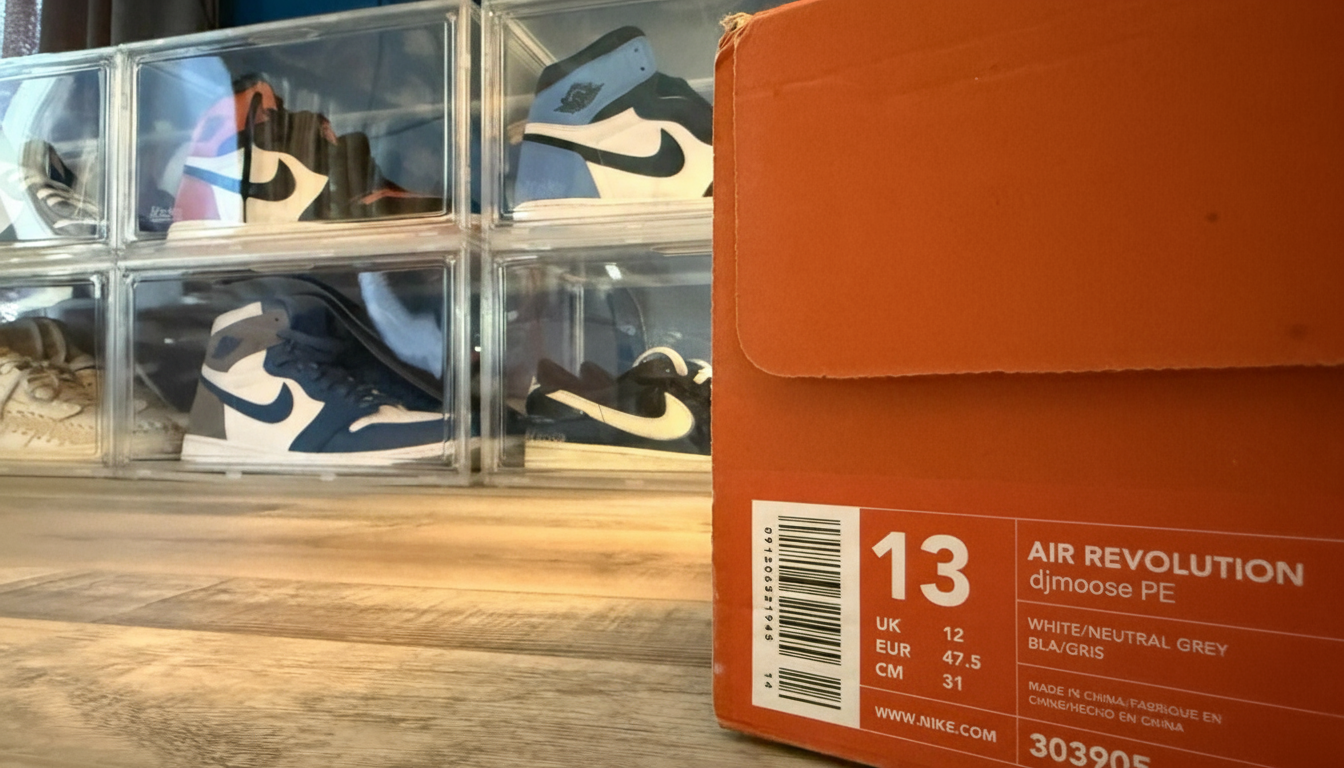
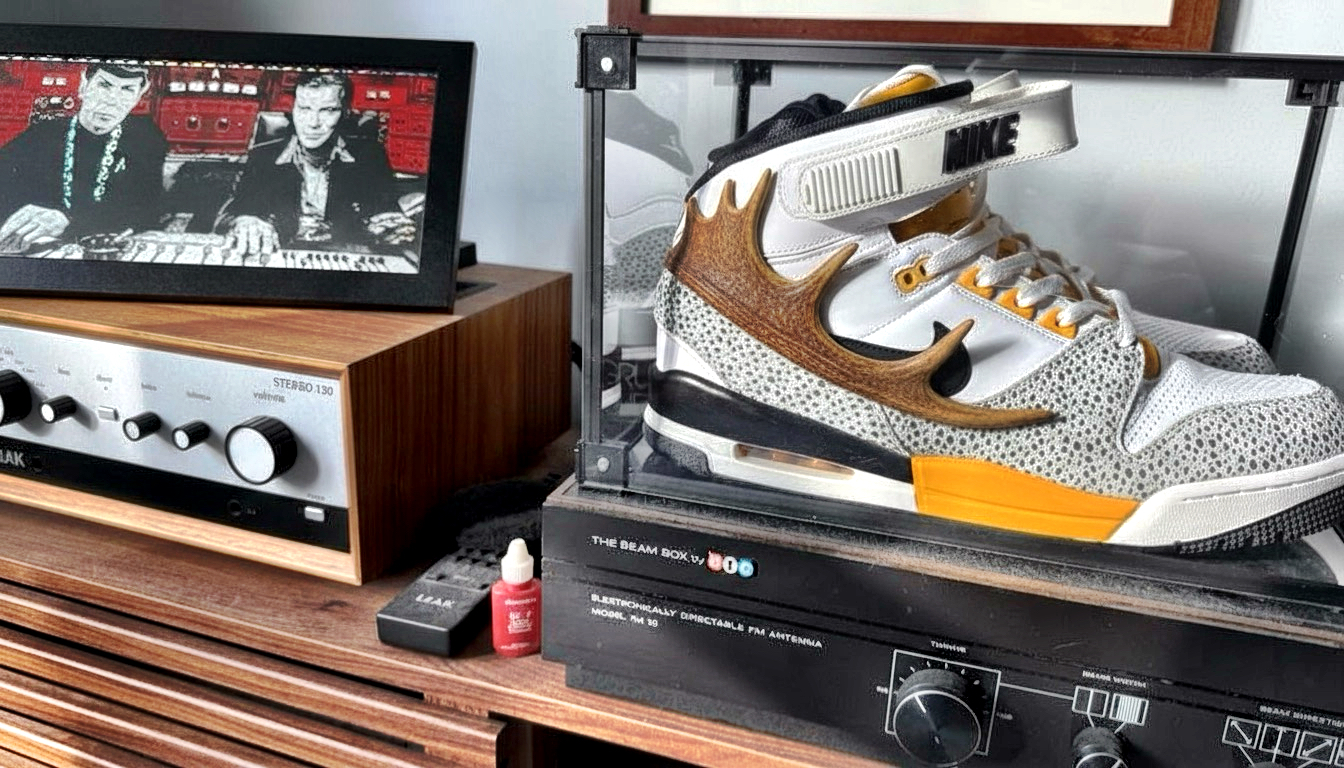
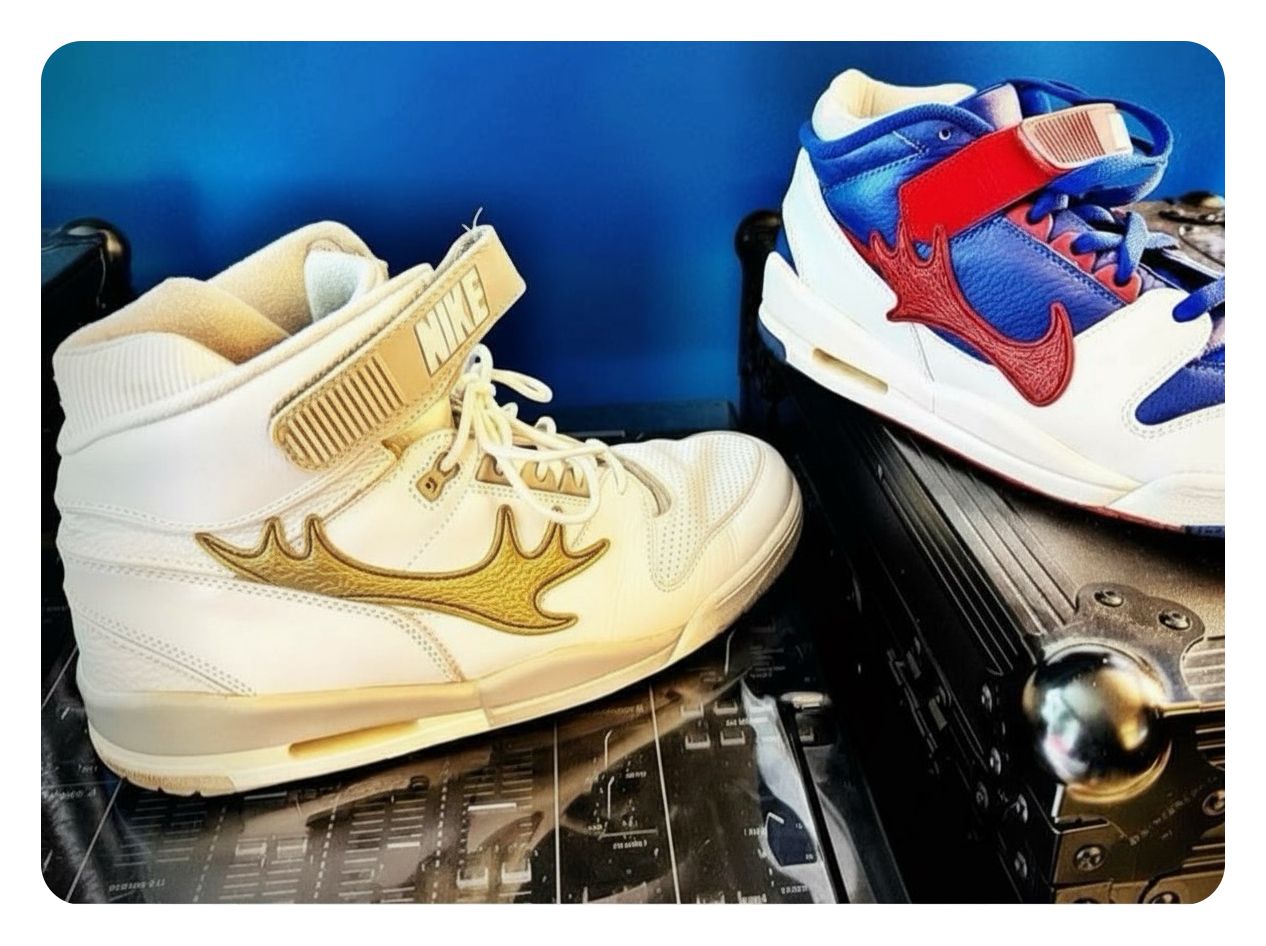
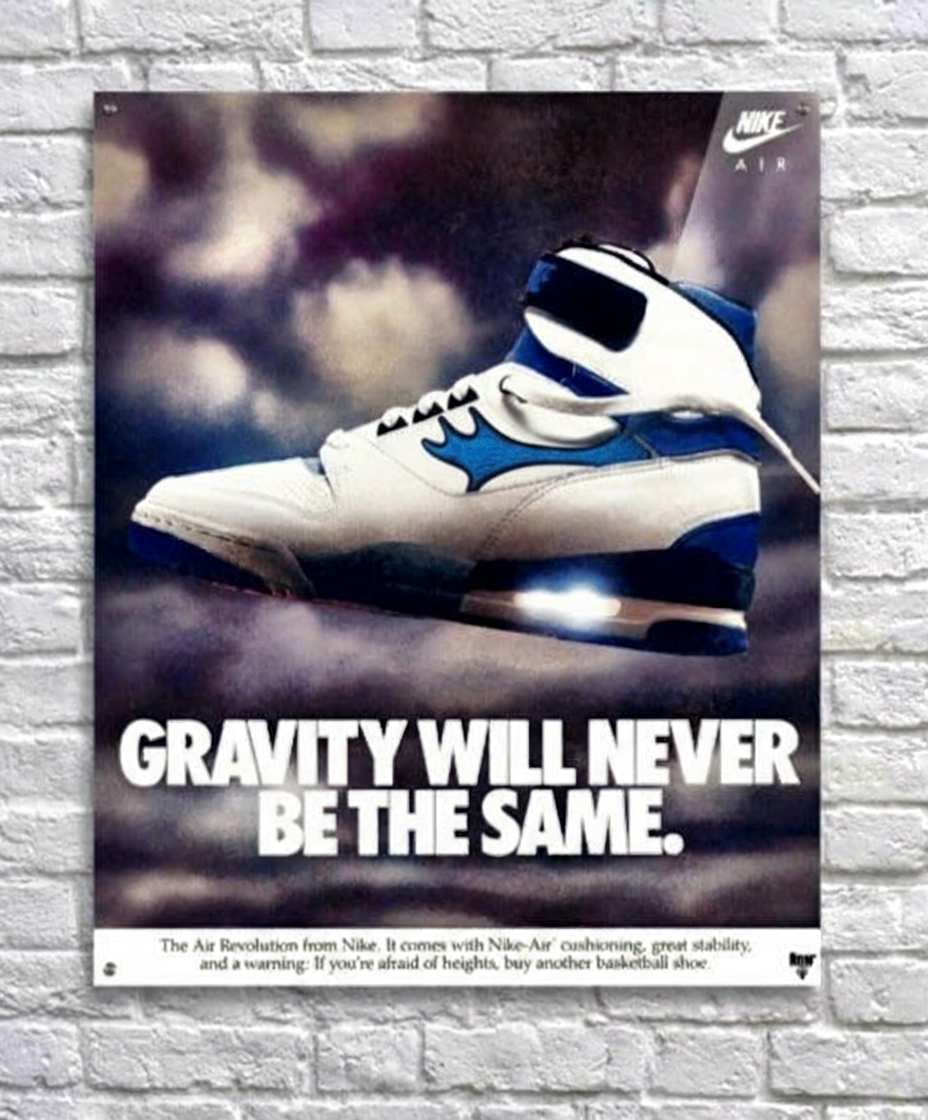
The title represents a few things close to my heart: my love of sneakers (especially the Nike Air Revolution — my all-time favorite), more revolutions around the sun as I keep getting older, and how I revolve between newer tracks and classics that I played out a lot when I was DJing many years ago but never made it onto one of my mixtapes. It’s all about the beautiful cycles that keep our music and culture spinning forward.
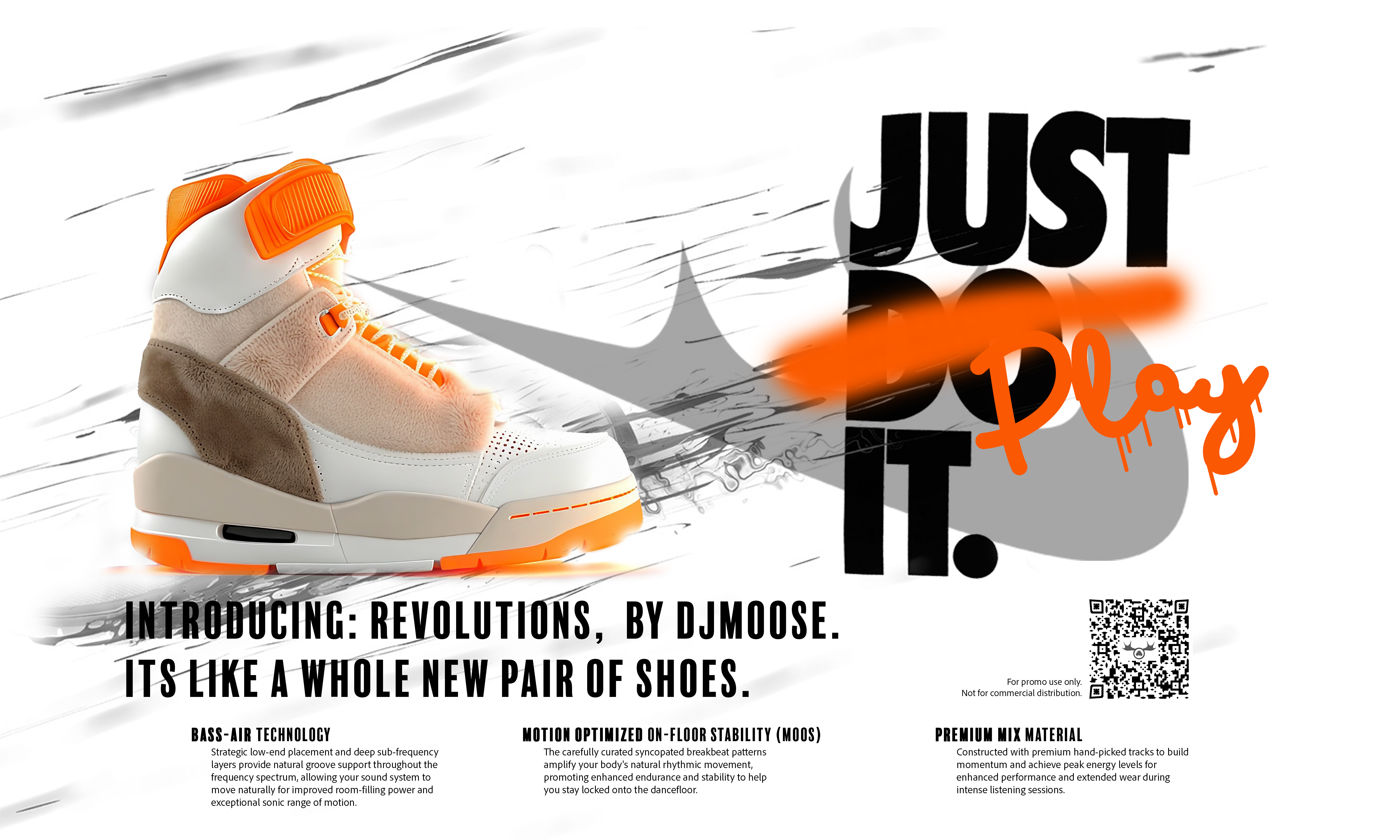
The artwork was Henry Mason’s idea — he suggested making the flyer look just like an old-school shoe ad you’d see in a magazine, which immediately took me back to the rave flyer days when party flyers were collectible, sometimes eccentric, and always a vital part of the culture. Henry’s influence on rave flyer design makes this homage even more special to me. It also brought back those middle school and high school memories of endlessly flipping through magazines in the late ’80s — just as sneaker culture was taking off thanks to hip-hop, basketball legends, and iconic releases, turning every ad or new model into a sought-after event. Putting these two worlds together — the nostalgia of rave flyers and the excitement of sneaker ads — ties together two of the happiest and most meaningful areas of my memories. The design features a futuristic take on those iconic Air Revolutions in an orange creamsicle (my favorite flavor and color) colorway with some fur detailing (representing the moose, of course). To me, this whole approach brings back the rush of anticipation and creativity that defined those times — hunting for the right flyer, catching glimpses of the latest sneaker ads, searching for the next party, spotting the next pair of shoes I couldn’t afford, and dreaming of the night when I’d finally step into that magical scene with the perfect kicks on my feet.
With each mix I do, I try new things and experiment. “Sound Counsel” was all about exploring tempo, self-expression, and learning the Camelot wheel. “Cleared Expectations” was all about trying to recreate what I would play out at a party, finally recording a breaks mix after many years, and testing new mixing styles. “Lowered Expectations” was more tempo experimentation and mood setting — could I keep it low and slow but still interesting?
“Revolutions” took a different approach — I got my hands dirty editing some tracks to fit the mix and really focused on keeping the energy going for the entire journey. One thing I’ve always struggled with is finishing a mix strong by sometimes just throwing in filler near the end. I feel that “Revolutions” builds the entire time, and each track keeps you interested until the end. I initially started with 30+ tracks I wanted to use… and this might be the first time I actually ever spent time deciding which ones would not make the final cut.
This was recorded live in one take — 2 CDJs and a mixer. I do this for the love of the music and to have mixes I’ll enjoy listening to years down the road. Hoping some of you will dig it too! Here’s a tip for anyone looking for workout music — this mix is perfect “elliptical ravestep” at 134 BPM the entire time.
What You’re About to Read
What follows is a complete track-by-track breakdown of “Revolutions” — all 21 tracks, every transition, and the stories behind the music. I originally shared this as a series of Facebook entries, but I’ve brought it all together here as one unified deep dive.
I want to invite you into my process, share some stories behind the tracks, and maybe demystify what goes on behind the scenes for my non-DJ and electronic music friends. Even if you don’t know a compressor from a crossfader, I hope you’ll enjoy seeing what goes into building these mixes.
This breakdown walks through the harmonic journey (from A-flat minor counterclockwise around the Camelot Wheel to F minor), the three peaks that structure the mix (Scram, Punks, and The Dancing Shadow), the technical mixing decisions, and the personal memories that shaped eachsome of the choices. Whether you’re a DJ wanting to understand the technique, a producer curious about track selection, or just someone who loves breaks and wants to go deeper — this is the full story.
I do this for the fun. Fifteen years ago, making a mix was like a DJ’s business card — a way to get party bookings or catch someone’s attention. Back then it was part hustle, part craft. But what I appreciated most was the creativity — arranging and blending tracks my own way to create a personal journey, then sharing that finished project. These days, my motivation is simple: it gives me a creative outlet, and I want mixes filled with music I genuinely enjoy — mixes I’ll keep coming back to, especially for those long elliptical sessions. At this point, I make these mixes primarily for myself, and if even a few of you connect with them, that’s a bonus.
The Harmonic Journey
Let’s talk about key. My last three mixes all rotated clockwise around the Camelot Wheel — a color-coded musical key system that helps DJs blend tracks harmonically by assigning each key a number and letter (like A minor [8A]). This time, I wanted to experiment and go counterclockwise. Other DJs probably do this all the time; I just hadn’t tried it yet.
A lot of electronic tracks — including some of my favorites in this mix — are in D minor (7A) and F minor (4A). Both keys have that “moody but energetic” sweet spot. D minor creates intensity, emotion, and drama; F minor brings punchy, driving energy and works well for big club basslines. These keys are favorites because they hit hard on the dancefloor and suit the sub-bass frequencies most systems can deliver.
Instead of starting there, my plan was to “arrive” at those classic keys, not launch with them. So I opened in A-flat minor (1A) and worked my way counterclockwise toward F minor (4A) as the final destination.
Track 1: Dr Beatz & GreenFlamez – Come in Closer
The journey starts with “Come in Closer” by Dr Beatz and GreenFlamez — and the title says it all. Those catchy vocals — “bring your body to me… closer every time, baby won’t you come in closer” — are the perfect invitation. I’m asking you to step into this mix, to lean in and take the ride with me. It’s inviting but not too big, paired with a gnarly distorted bassline that sets the tone for what’s ahead.
I edited the breakdown (right at 2:53–3:00 in the mix) to isolate the vocals, letting me cleanly mix into “Die Rect” by The Darrow Chem Syndicate.
Track 2: The Darrow Chem Syndicate – Die Rect (Sergei Orange & Phattom Remix)
Both tracks are in A-flat minor (1A), so the previous vocals layer perfectly over “Die Rect” (listen from 3:50–4:20). Here, the vocals aren’t just a transition tool, they create a mini mashup between the two tracks. “Die Rect” is a big second track, building on “Come in Closer” with another huge bassline and supporting vocal elements.
Track 3: DJ Quest feat. Odissi – Break Me
Next is an all-timer for me: “Break Me” by DJ Quest feat. Odissi. This one dropped in October 2007, almost 20 years ago, and I played it at parties many times but never got it onto a mixtape. “Break Me” is the first key change, dropping down to D-flat minor (12A). Again, I edited for isolated vocals during the key transition (check 6:28–6:57), providing a smooth bridge and helping to divert attention from the fact that “Die Rect” is simply playing out until its end — that was my intention, anyway.
Track 4: Plump DJs – Scram (RePlumped)
Coming off “Break Me,” I knew “Scram” by Plump DJs was also in D-flat minor (12A). These two were destined to be paired together in a djmoose mix. The question was which would come first. I’m a sucker for vocal transitions, so I opted to use isolated vocals from “Break Me” for the blend — creating another mini mashup of two of my all-time favorites. I wanted to build excitement for the heads who might be surprised with “Break Me,” get an even bigger hit with “Scram,” and add yet another surprise with the mashup — a little Question & Answer session between the tracks. Pay attention to that… it sounds really cool.
Let’s talk about “Scram.” Absolutely one of my favorite breakbeat tracks ever, first released in 2000 on Finger Lickin’ Records. I was a huge Plump DJs fan, but the track truly stuck with me after hearing it played out at Valhalla — a party thrown by my good friend Malachi at the Cotton Club in Cleveland in 2001. Diggabeats Zone were tagging in the basement. Digga dropped “Scram,” and I lost my mind. (Henry Mason designed the flyer for that party, too!)
This track builds, twists, and goes somewhere. In this mix, I use the “RePlumped” version — same energy and vibe amplified. I love it so much I had to let the whole thing run, and it helps set up the next key change. This is the first peak of the mix — a tribute to the classic breaks sound that shaped my love for the genre.
Track 5: Vent – Ignite
Next up is “Ignite” by Vent, released on Hardcore Beats in 2008. The track comes in with a massive bassline and unmistakable energy — plus a lighter flick right at the silent breakdown. When I first heard “Ignite,” Zone introduced it to me at his place and — no lie — he pulled out a lighter and timed the flick perfectly with the track. If you ever saw the Breakbeat Militia (Zone, Dave Clevr, Hutch, and myself), you know we all had our own typical sound even though we all played breaks, and “Ignite” is pure Zone. That moment always stuck with me, so this is a little nod to my brother Zone in the mix. The breakdown mix kicks off at 14:07, giving listeners a breather after “Scram,” while ramping up for the key change to F-sharp minor (11A).
Track 6: Nokaut – Superstyle
From here, I bring in some newer material: “Superstyle” by Nokaut, released December 2024 on Elektroshok Records. The mix at 16:30 uses a staggered breakdown: the ending breakdown from “Ignite” sets up Superstyle’s intro, and both tracks in F-sharp minor (11A) flow together. As Superstyle’s intro bassline rolls in, it almost feels like Ignite’s breakdown is extending — then out of nowhere, you get the “Pump Up the Volume” vocals and a fuzzy, charging bassline. This track drops the intensity just a notch but brings a super catchy groove.
Track 7: Krafty Kuts – Wub Juggler
Last in this section is “Wub Juggler” by Krafty Kuts, released February 2025 on Against the Grain Records. Here we jump two steps down on the Camelot Wheel to E minor (9A) — a move that can bring a big power boost if timed right. I let the previous bassline fade out at 19:37 and bring in Wub’s pads for a musical key change. “Come on, everybody!” The transition is noticeable but musical — beats interlock (wait for the kick to finish at 20:19) and then the droning bass from “Wub Juggler” carries it forward. That key change, stabbing bass, and dancing beat keep the vibe pulsing as we approach the halfway point.
Track 8: Aggresivnes – It’s a Classic
Coming out of Krafty Kuts’ “Wub Juggler,” at around 23:00, I go into a real “DJs will appreciate this” kind of transition — a clean, classic beatmix into Aggresivnes’ “It’s a Classic” (released March 2025 on Elektroshok Records). This is a super smooth handoff that waits until the bassline of the previous track finishes before introducing the groove. The move also drops the key down into A minor (8A).
I only run the first portion of “It’s a Classic,” cutting at its breakdown to set up a breakdown mix straight into the next track. This quick sequence acts as a bridge, moving us toward the mix’s next peak.
Track 9: Hankook – Sur 2022
At the breakdown, “Sur 2022” (released in 2022) comes in, marking the halfway point of “Revolutions.” This track is actually in D-flat minor (12A). But while auditioning tracks, I noticed how similar “Sur 2022” and “303 (Citybox Remix)” sound — rhythmically, tonally, and in overall atmosphere. They both use orchestra hits in slightly different but complementary ways — just enough to catch your ear or maybe even divert your attention for a second…until the new bassline drops. That kind of detail absolutely calls out to be connected.
Track 10: Hankook – 303 (Citybox Remix)
Yes, it’s two Hankook tracks in a row, but since “303” is a remix, it plays like a natural sequel.
As I’ve been learning my way around the Camelot Wheel, I realized that tuning D-flat minor (12A) up a semitone lands it nicely into D minor (7A) — a key destination I’ve been building toward and a perfect midpoint marker. D minor sits right in that sweet spot emotionally — dark, intense, but with just enough brightness to drive the dancefloor without feeling heavy. It’s the kind of key that feels like a release after the build-up, pulling everything together musically and emotionally.
With that in mind, I preemptively tuned up “Sur 2022” and did a breakdown mix right into “303” at D minor (7A). The result? Three tracks that move fast (roughly 90 seconds apiece) but feel cohesive — a bridge from the punchy A minor (8A) energy into the fuller, more expressive sound of D minor (7A). It’s musical, seamless, and subtle enough that if you’re not listening for it, you might not even realize what just happened.
Track 11: Freestylers – Punks
Then comes the payoff — out of the massive bassline of “303,” I roll right into one of the most legendary breaks anthems of all time: Freestylers’ “Punks” (originally released 2002 on Against the Grain Records). This track is a cornerstone of the early 2000s breaks sound, and it fits perfectly as a nostalgic pulse at the halfway mark. Around 28:26, I isolated the iconic Wu-Tang Clan sample (“Clan in da Front”) to layer over the tail end of “303,” giving it that authentic breaks-meets-hip-hop call-and-response feel.
To make the next handoff work, I had to do a slight edit of “Punks” to smooth the transition — trimming out its building bassline so it could land cleanly. Starting around 29:08, you’ll hear the “2 Bad Mice” drum sample and those classic “Clan in da Front” vocals sitting over the tail of “303.” Then, in proper Freestylers fashion, the unmistakable horn/synth riff from “Blow Your Mind” by Fred Wesley & The J.B.’s takes over — and that’s when the nostalgia really hits.
I have countless memories of playing “Punks” at parties back in the day — it’s one of those tracks that defined an era for me. It will always be one of my favorites. This is the second peak of the mix — honoring the classic breaks era and marking the emotional midpoint.
This whole run — from “It’s a Classic” to “Punks” — feels like a bridge between past and present breakbeat energy. It blends new-school production with the essence of the genre’s golden years, and reaching D minor (7A) here feels like the mix finally “arrives.” It’s where momentum meets meaning — the emotional core of the set and the turning point before launching into the second half.
Track 12: Ctrl-Z & AKAS – Dancing With Wolves
This section marks a shift in focus — moving from bass-heavy drive into groove, atmosphere, and flow. It represents the transition from the emotional midpoint (7A) to the final key destination (4A) — a journey of rhythm evolving and energy transforming as the mix nears its end.
At 32:43, I went with what I’d call a “smash-cut” type of transition, something I don’t do often, but it just worked here. Sometimes, it’s better to jump straight into the next groove rather than ease into it. “Dancing With Wolves” sits in D minor (7A) like the track before it, so harmonically it still locks in. The jump is sharp and intentional — sudden movement, and it’s on to the next track.
I’ve been a big Ctrl-Z fan for years, and this new release from July 2025 absolutely had to make it into “Revolutions.” It’s grimy, full of motion, and that dirty, wobbly bassline brings classic Ctrl-Z punch — the kind that shaped so much of early 2000s breaks. If you listen closely, you’ll catch subtle details — tiny fluttering reflections of air and vibration around the bass, like the track itself is breathing. It’s alive — not just as sound, but as feeling. Like the werewolf in its title, it’s a transformation — a human emotional revolution of its own kind. It’s the awakening inside — that moment instinct and emotion fuse into movement.
Track 13: Urbano & Orebeat – In Your Mind
At 34:09, this one fades in with a clean, classic beatmix — the new percussion slides beneath “Wolves” perfectly, both grooves locked without competition. At 34:37, “Wolves” hits its breakdown while “Mind” keeps climbing.
Listen close: the exhale-style breaths fall right on the 2s and 4s, trailing over the breakdown of “Mind.” It’s subtle at first, but once you hear it, it’s impossible to miss. It’s like the breath of the werewolf itself is chasing you — you might think you’re running from it, but what if the thing you’re running from is already inside you? In Your Mind.
Released September 2025, this track brings a gentle energy lift and shifts focus toward hypnotic groove. A droning bassline fills the air, bridging the darker edge of “Wolves” and the fluid rhythm of what’s next. This is the turning point — where “Revolutions” stops being anchored in weight and starts to move with flow. It’s that late-night zone where your body stays locked to the beat while your mind drifts into something deeper.
Track 14: Guau – Get Up
At 36:32, we keep that groove alive with “Get Up” by Guau, released July 2025. It hits right where it needs to — bouncy, swinging, and full of nu skool breaks flavor. Guau’s crisp drums and warm, funky low end make it impossible to stand still.
I blend this one in with another tight beat transition — right into its opening breakdown. If I re-recorded “Revolutions,” I might drop the level slightly as it enters — but this mix was recorded live in one take. That’s part of what makes it real — capturing that raw, in-the-moment energy.
“Get Up” does exactly what it promises — it keeps the floor moving. Its long looping breakdown holds the groove steady, letting the mix breathe without losing rhythm. That’s why I placed it here — to set up one of the most important transitions in the set.
Since “Get Up” is in F-sharp minor (11A), I tuned it up a semitone to G minor (6A) to bridge D minor (7A) — our last major stop — with the ultimate goal: F minor (4A). That 6A groove becomes a perfect launchpad; around 38:51 I start looping “Get Up,” locking the rhythm as “The Rhythm Is” prepares to land.
Track 15: Triple Point – The Rhythm Is
At 38:56 comes “The Rhythm Is” by Triple Point, released December 2024, mixing perfectly through “Get Up’s” groove.
This track literally tells you about rhythm and groove — and even asks you to “Let me take you on the (dance) floor.” It’s perfectly self-aware — meta but sincere. A gritty droning bass and steady percussion make it both hypnotic and commanding. It’s the kind of track that doesn’t just talk about rhythm — it embodies it.
I play through its second breakdown because the bassline evolves into a brilliant wobble that deserves its space. That’s also where “Revolutions” hits F minor (4A) — the harmonic homecoming. The tuned-up G minor (6A) from “Get Up” drops right into F minor (4A), skipping G-sharp minor (5A) in a bold, clean whistle of energy. Another “power move” key change — when harmony and intent meet perfectly.
We’ve arrived at the destination key, and everything from here unfolds within that harmonic home.
Track 16: Rhades – LALALA
At 42:30, with “The Rhythm Is” fading down, the beat mix into “LALALA” by Rhades begins. This track ignites the setup for the third and final peak of “Revolutions” — a chapter about meaning, motivation, and persistence.
The first breakdown vocal says, “I’ll just keep dropping it.” That line is everything. It captures why I DJ and why I keep putting in the work — because this music moves me and I can’t help but keep creating mixes, no matter how old I get or who’s listening. This stage of “Revolutions” is about persistence and purpose, not just a placeholder at the end.
Then comes another deliciously fuzzy, gritty bassline — thick, warm, and emotional — the perfect nu skool breaks weapon.
Next, the vocal literally tells you what’s coming: “When I hear it coming up like that, I just know that things are gonna end bad….” — and you should know something “bad” (in the best possible way) is about to go down. At 44:25 the next track sneaks in so smoothly you might not even realize the handover has happened; suddenly an absolutely menacing soundscape is taking over and signaling the approach of the final climax.
I isolated “LALALA’s” vocals and let them glide above the new track fading in underneath — a technique that adds final weight to this moment.
Track 17: Hankook – The Dancing Shadow
At 44:25, with the vocals from “LALALA” still lingering in the air, the build-up of “The Dancing Shadow” begins. This is the third and final peak of “Revolutions” — and it’s the one I’ve been waiting for.
The first two peaks were “Scram” and “Punks” — both classic tracks, two of my all-time favorites that represent where this sound came from. For the third peak, I needed something different: a track that embodies exactly my favorite kind of modern nu skool breaks. Released June 2025, “The Dancing Shadow” is that track. It’s powerful, it’s massive, and it puts me in a good mood every single time I hear it.
I bring in the vocals from “LALALA” one more time for another little mini-mashup before the main heavy filtered bassline drops. When it hits, it hits. This track is pure energy — big, bold, and unrelenting. Yes, it’s another Hankook track (the third one in “Revolutions”). It is what it is — when a producer consistently delivers what moves you, you don’t apologize for it.
Staying in F minor (4A), “The Dancing Shadow” is the emotional and harmonic climax of the entire mix. From here, we ride the high while beginning the journey down.
Track 18: The Push, Delzie – No Conversation (Cude Remix)
At 48:14, the beat mix into “No Conversation” begins. It might sound like another smash-cut, but it’s actually a beat transition that doesn’t add much to the handoff — the volume stays rather low before the breakdown. I didn’t want to build up from “The Dancing Shadow.” Instead, I wanted a reset — a moment to breathe.
Released August 2025, “No Conversation” is a logical step down from the peak, giving you space during its first breakdown while still building back up with a nice bounce and that 2-step feeling (without actually being 2-step). But at 49:25, the chorus brings in a killer sawtooth bassline that I can’t stop listening to. It’s infectious, it grooves, and it bridges the gap between peak and comedown beautifully.
The track stays in F minor (4A), maintaining the harmonic center while shifting the energy into a more laid-back, groove-focused zone.
Track 19: FM-3, Jose Rodríguez (Spain) – Bang
The mix into “Bang” starts at 49:54 with another one of those DJ-appreciated transitions — I’m looping the outgoing breakdown while the chants from “Bang” slowly creep in, building tension before the drop.
Released May 2025, “Bang” is a collaboration between FM-3, Jose Rodríguez, and MBreaks — and it delivers exactly what I needed: the dirtiest bassline near the end of the mix. It’s raw, aggressive, and uncompromising. Powerful hard breaks paired with that grinding, distorted bassline — it’s one last punch before the final comedown.
This is the moment where the mix reminds you it still has teeth, even as we approach the landing.
Track 20: SellRude – No Sleep
The transition into “No Sleep” begins at “Bang’s” breakdown — 51:50 — where I loop the chant (listen for it). Released October 2024, “No Sleep” has a long, synthy build-up that takes its time. The breakdown is expansive and atmospheric, but when the drop hits, you realize you’re hearing something a little different… some serious Florida breaks vibes — that classic electro-funk sound that defined the Tampa and Orlando scenes in the late ’90s and early 2000s.
What stands out most? There’s no big bassline here. That’s intentional. After “Bang’s” aggression, “No Sleep” brings elegance, melody, and space. It’s warm, groove-focused, and marks the beginning of the true comedown. Staying in F minor (4A), it maintains harmonic cohesion while shifting the emotional tone toward reflection.
Track 21: Mary Droppinz – Really Don’t Care
This is the longest transition in the entire mix. At 54:26, during “No Sleep’s” second drop, “Really Don’t Care” begins. It’s subtle at first — you can hear it if you’re listening closely — but by 54:58, it’s unmistakable. These two tracks fit together so naturally that I wanted to see how long I could keep “No Sleep” looping underneath. Starting at 55:24, I keep it active for the rest of the mix (minus the breakdown). Listen for it — and at 58:23, you’ll hear the “No Sleep” loop finally fade away. I did that on purpose for anyone listening all the way to the end, hoping they’d hear it disappear and think, “Wait… there was a loop running the whole time?”
Released February 2024, “Really Don’t Care” keeps that Florida breaks feel while adding a purposeful bassline — not aggressive, but present and grounding. The vocal message is what makes this track the perfect finale: “I really don’t care if you don’t like me.” It’s empowering. Not aimed at anyone, but meant to lift the listener up. Do your thing, and I’ll do mine.
When paired with “LALALA’s” message (“I’ll just keep dropping it”), the two create a powerful statement about persistence, confidence, and creative independence. It’s about staying true to what moves you, regardless of external validation.
The Full Circle
“Revolutions” tells a story much bigger than a collection of tracks — it’s about cycles, transformation, and creative persistence. The mix revolves around three carefully chosen peaks: “Scram” and “Punks” (classics that honor where the genre came from), and “The Dancing Shadow” (representing where it’s going). Each peak represents a different era, a different energy, yet all share the same spirit.
The harmonic journey mirrors this evolution — a revolution around the Camelot Wheel — moving from the intensity of D minor (7A) at the midpoint to the ultimate destination of F minor (4A), where the final act unfolds entirely within that key, creating a sense of homecoming and resolution.
Recurring themes emerge throughout: the opening invitation (“come in closer”), vocal messages about persistence (“I’ll just keep dropping it”), empowerment (“I really don’t care if you don’t like me”), and rhythm as a guiding force (“Let me take you on the dance floor”). The blend of old and new tracks, the mini-mashups, the loops (revolutions?) that linger beneath transitions — they all reflect the idea that music, like life, is cyclical. We honor the past while pushing forward. We loop, we evolve, we return transformed.
That’s what a revolution is: not just a single turn, but the continuous motion of growth, change, and staying true to what moves you — no matter how many times the wheel spins.
If you’ve made it this far, you’ve experienced “Revolutions” the way it was meant to be heard — with attention, intention, and an open mind. I hope it moved you the way it moved me while creating it.
Keep spinning.